How to finance a tiny house
Which loans work for tiny homes on wheels and on foundations, what they cost in October 2026, and the clauses that disqualify full-time living.
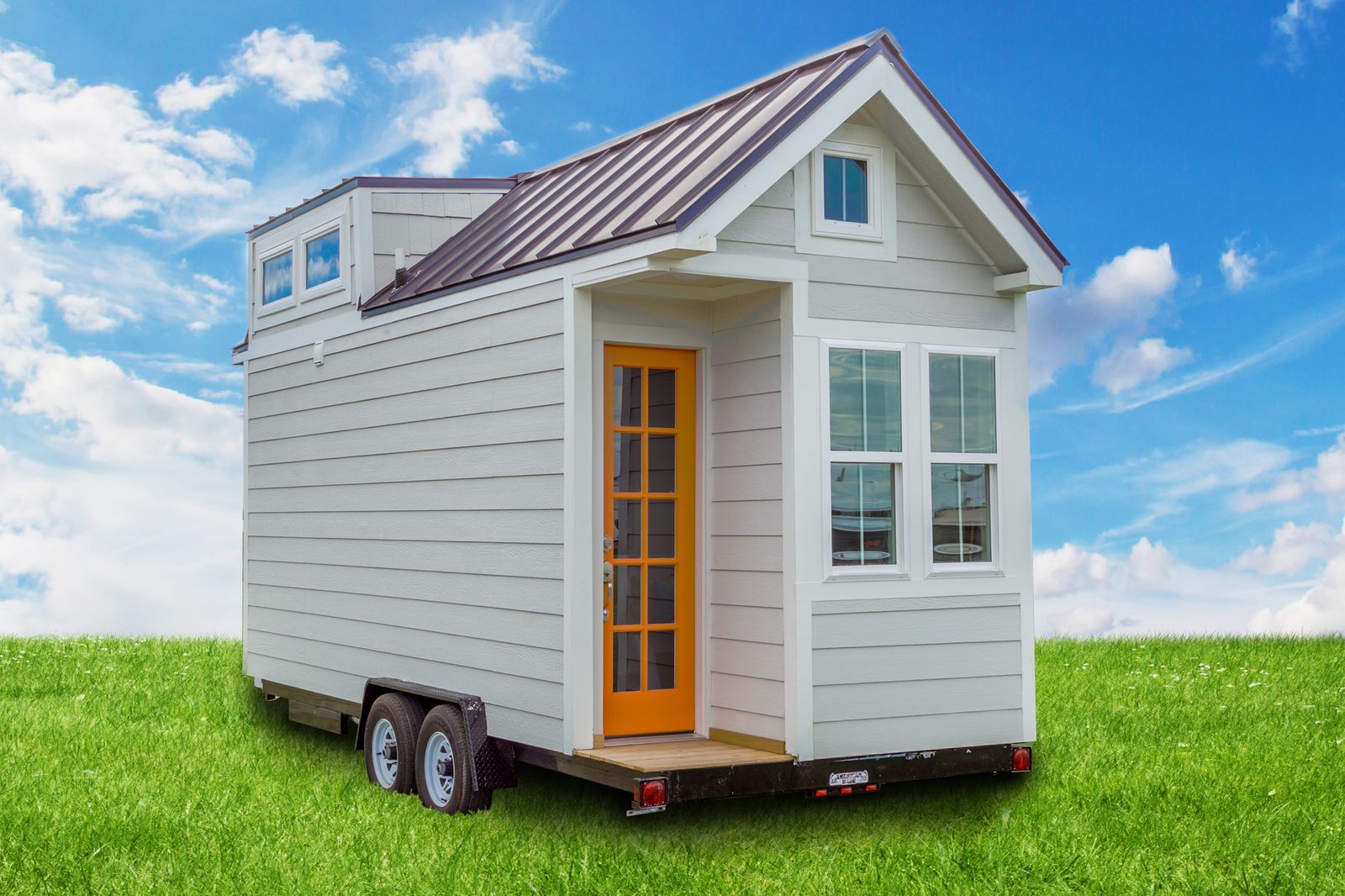
Most tiny houses on wheels are financed with an RV loan (if the home is RVIA-certified and the lender allows it) or an unsecured personal loan, which costs more and runs shorter. A regular mortgage is usually off the table because a tiny house is too small or isn't real property. If you own a house with equity, a HELOC to build a permitted ADU is often the cheapest route.
The short answer
There is no single "tiny house loan." There are five ways people actually pay for one, and which ones you can use depends on whether the house is on wheels or a foundation, whether it's certified, and whether you already own a home.
| Option | Works for | Typical term | Rate benchmark (Oct 2026) | Catch |
|---|---|---|---|---|
| RV loan | RVIA-certified THOWs, park models | Up to 15 years at Suncoast | Suncoast example: 7.25% new, 7.75% used (180 payments) | Many exclude homes used as a primary residence |
| Unsecured personal loan | Anything, including DIY builds | LightStream lists 24 to 240 months across loan types | Fed average 24-month personal loan: 11.90% (Aug 2026) | Higher rate, often lower max amount |
| Chattel loan | Manufactured and some factory-built homes on rented land | Varies | Higher than mortgages (CFPB) | Fewer consumer protections |
| Builder financing | Homes from builders with a lending partner | Varies | Ask for the APR | It's the partner lender's terms, not the builder's |
| HELOC or cash-out refi | A permitted ADU on land you own | Varies | Prime rate plus a margin; prime was 7.00% on Oct 16, 2026 | Your main house is the collateral |
For scale: Freddie Mac's 30-year fixed mortgage average was 7.40% on October 15, 2026.
Why a regular mortgage usually won't work
A mortgage is a loan against real estate. A tiny house on a trailer is a vehicle, and HUD's own rule (24 CFR 3282.15) says an RV is "designed only for recreational use and not as a primary residence or for permanent occupancy." Lenders read that sentence too.
Even manufactured homes, which are built as dwellings, have size floors. Fannie Mae requires a manufactured home to be at least 12 feet wide with at least 400 square feet of above-grade finished area, on a permanent foundation, titled as real property. Most tiny houses are 8.5 feet wide and under 400 square feet.
A tiny house on a permanent foundation, built and permitted as a dwelling, is a different story. Fannie Mae has no minimum size for modular homes built to the IRC. The practical barrier then becomes the appraisal: the appraiser needs comparable sales, and there may be none nearby. Ask a local lender before you design.
The wheels vs foundation trade-off is covered in detail in tiny house on wheels vs foundation.
Downsizing budget calculator
Redo your monthly budget: what you pay now vs. living small, and where the freed-up money goes.
Try itOption 1: RV loans
If your tiny house is RVIA-certified, an RV loan is usually the cheapest debt available.
Real example, Tampa-based Suncoast Credit Union (checked October 2026):
- Maximum term 15 years (180 months)
- Maximum financing $400,000
- Example rates 7.25% APR new, 7.75% APR used, each based on 180 payments
- "New" means model year 2025 or later; "used" means 2018 to 2024
- Excludes RVs "used as a primary residence"
That last line is common, and it's the one that kills deals. If you plan to live in the house full time, tell the lender and get the answer in writing. Don't misstate occupancy on a loan application.
What the payment looks like
Our math, standard amortization:
| Amount | Rate | Term | Monthly payment | Total interest |
|---|---|---|---|---|
| $60,000 | 7.25% | 180 months | about $548 | about $38,600 |
| $60,000 | 11.90% | 60 months | about $1,332 | about $19,900 |
| $60,000 | 11.90% | 84 months | about $1,056 | about $28,700 |
The long RV loan has the lowest payment and the highest total interest. If you can afford the shorter payment, you keep the difference.
Option 2: Personal loans
An unsecured personal loan doesn't care what you buy with it. That makes it the default for DIY builds, uncertified homes and shells.
- The Federal Reserve's average commercial bank rate on 24-month personal loans was 11.90% in August 2026 (G.19 release, October 7, 2026).
- LightStream, a national online lender, lists loans of $5,000 to $100,000 and terms of 24 to 240 months depending on loan type, with general APRs from 6.74% to 15.04% with AutoPay and a maximum of 25.79%. The rate data on that page was dated to late 2024, so check the current figures.
Good credit gets you near the bottom of those ranges. Fair credit can put you near the top, which on $60,000 is the difference between a manageable payment and a second rent check.
Option 3: Chattel loans
A chattel loan is secured by the home itself but not the land under it. It's common for manufactured homes on rented lots and sometimes available for park models.
The CFPB reported in 2021 that about 42% of manufactured home purchase loans were chattel loans, and that these generally carry higher interest rates and fewer consumer protections than mortgages. If a dealer offers in-house financing on a park model, ask whether it's chattel and compare it to an RV loan and a personal loan.
Option 4: Builder financing
Many builders advertise monthly payments. Tumbleweed's for-sale page lists a $92,959 tiny house on wheels with payments from $809 a month. Our check: $92,959 at the Suncoast example of 7.25% over 180 months is about $849 a month, so $809 implies a lower rate, longer term or down payment. The page doesn't say which.
Before you sign builder financing, get:
- The actual lender's name
- APR, term and total cost of the loan
- Required down payment
- Whether full-time occupancy is allowed
- Whether the home must stay certified, insured and at an approved location
Option 5: HELOC or cash-out refinance for an ADU
If you already own a house with equity and your city allows accessory dwelling units, you can borrow against the main house to build a permitted tiny house in the backyard.
HELOCs are usually variable-rate: the lender adds a margin to an index such as the prime rate. Prime was 7.00% on October 16, 2026 (Federal Reserve H.15). When prime moves, your payment moves.
This route has two advantages: rates tied to your home equity, and a permitted, insurable structure at the end. The risk is that your main house secures the loan.
Florida law lets local governments allow ADUs in any single-family zone (Fla. Stat. 163.31771, first enacted in 2004 per its history note), but it doesn't require them, so each city and county sets its own rules. See Tampa Bay ADU rules for size caps, owner-occupancy and parking by city.
ADU help in Tampa Bay
If you're building a backyard unit in Pinellas or St. Pete, a few local programs cut the cost (checked October 2026):
- Pinellas County fee waiver: applicable development review fees are waived for ADUs in unincorporated Pinellas (Pinellas County).
- Pinellas multigenerational exemption: if a parent or grandparent aged 62 or older lives in a new ADU, the property's assessed value can be reduced by the ADU's added value or 20% of the total assessed value, whichever is less. It applies to improvements after July 30, 2024; apply through the Property Appraiser (Pinellas County).
- St. Petersburg grant: in the South Side Community Redevelopment Area, the Affordable Residential Property Improvement Grant can reimburse up to 40% of eligible improvements, including converting an existing building into an accessory unit, for households under 120% of area median income (City of St. Petersburg).
None of these pay for a tiny house on wheels. They apply to permitted ADUs. Rules by city are in Tampa Bay ADU rules, and the state picture is in are tiny homes legal in Florida.
Paying cash, or mostly cash
The cheapest financing is none. Common ways tiny house buyers cut the loan:
- Buy a shell and finish the interior over time (shell prices in tiny house cost)
- Sell the stuff a big house required (see how to downsize your home)
- Build in phases: trailer and shell first, systems second
Before you borrow: the checklist
Questions people ask
Can you get a mortgage for a tiny house?
Rarely. A conventional mortgage needs real property. Fannie Mae requires a manufactured home to be at least 12 feet wide with 400 square feet of finished area on a permanent foundation. A tiny house on a trailer fails that. A foundation tiny house can qualify in some cases, but lenders also need comparable sales to appraise it, and those are scarce.
What credit score do I need for a tiny house loan?
It depends on the lender, and most don't publish a hard cutoff. What is published is the rate spread: LightStream, for example, lists general APRs from 6.74% to 25.79% depending on credit and loan type. Your score mostly decides where in that range you land, which can double the monthly payment.
Is an RV loan or a personal loan better for a tiny house?
If you qualify, an RV loan is usually cheaper and longer. Suncoast Credit Union's example RV rate was 7.25% for 180 months; the Federal Reserve's average 24-month personal loan rate was 11.90% in August 2026. But many RV loans exclude homes used as a primary residence, so check before you apply.
Do tiny house builders offer financing?
Many advertise it. Tumbleweed's for-sale page lists a $92,959 tiny house on wheels with payments from $809 a month. Builder financing is usually arranged through a partner lender, so ask who the lender is, the APR, the term and whether full-time occupancy is allowed before you sign.
Can I use a HELOC to build a tiny house in my backyard?
Yes, if you own a home with equity and your city allows an accessory dwelling unit. HELOC rates are usually variable, set at an index such as the prime rate plus a margin. Prime was 7.00% on October 16, 2026. You are borrowing against your main house, so missed payments put that house at risk.
Are there grants or tax breaks for ADUs in Tampa Bay?
A few. Unincorporated Pinellas waives development review fees for ADUs and offers a property tax reduction when a parent or grandparent aged 62 or older lives in a new ADU. St. Petersburg's Affordable Residential Property Improvement Grant can reimburse up to 40% of eligible improvements in the South Side Community Redevelopment Area for households under 120% of area median income.
Sources
- Federal Reserve — G.19 Consumer Credit, terms of credit (Oct 7, 2026 release)
- Federal Reserve — H.15 Selected Interest Rates
- Freddie Mac — Primary Mortgage Market Survey
- Suncoast Credit Union — RV loans
- LightStream — Loan rates and terms
- Tumbleweed Tiny House Company — Tiny homes for sale
- Fannie Mae Selling Guide B2-3-02 — Factory-built housing
- CFPB — Manufactured housing loan borrowers face higher interest rates (2021)
- Citizens Bank — How is my HELOC rate calculated?
- eCFR — 24 CFR 3282.15, Exclusion of recreational vehicles
- Progressive — Can you insure a tiny home?
- Florida Statutes 163.31771 (2025) — Accessory dwelling units
- Pinellas County — County ADU update and multigenerational tax exemption (Sept 2024)
- City of St. Petersburg — Accessory Dwelling Units
Prices and rules change. We list the date we checked; confirm anything you're about to spend money on with the seller or your local permitting office.