Tiny homes and hurricanes in Florida
Anchoring rules, evacuation orders and insurance gaps for tiny homes on wheels and foundations in Florida and other hurricane states.
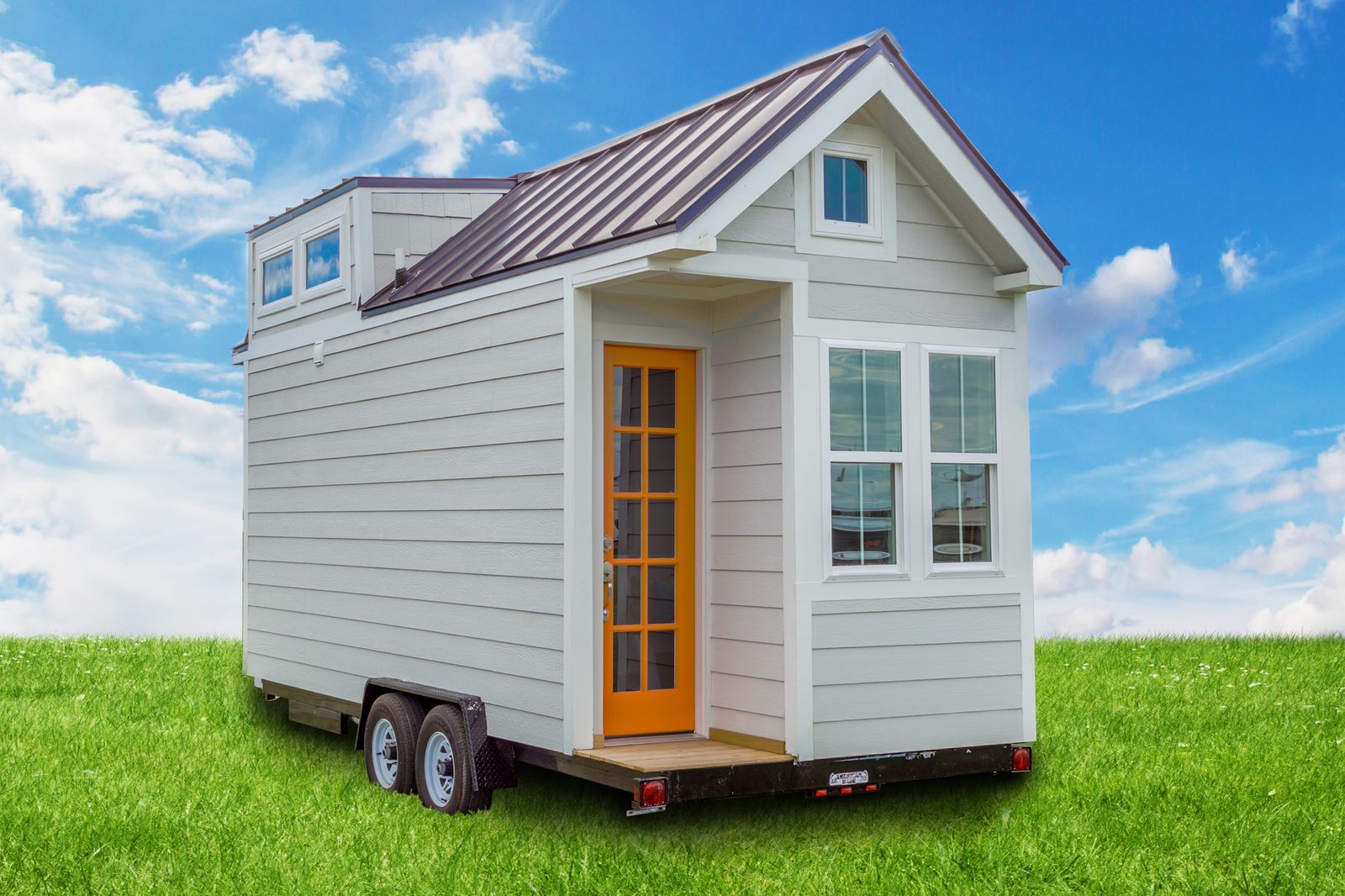
A tiny house on wheels should be treated like a mobile home in a hurricane: anchored to Florida's installation rules if it stays put, and evacuated every time an order is issued. Pinellas County says mobile and manufactured home residents must always evacuate. Flood insurance through the NFIP doesn't cover RVs at all, so a tiny house on wheels in a flood zone has a coverage gap you need to plan around.
The short answer
In a hurricane, a tiny house on wheels is a light, tall box with a lot of side area. Treat it like a mobile home:
- Anchor it to Florida's installation rules if it stays in one place.
- Evacuate every time your county orders mobile home residents out, which in Pinellas is every evacuation.
- Fix the insurance gap now. NFIP flood insurance does not cover RVs.
A tiny house on a permanent foundation is a different case: it's built to the Florida Building Code's wind design for its site and can carry NFIP flood coverage. Neither type makes it safe to ride out a storm surge.
Evacuation: assume you're going
Pinellas County's evacuation page is blunt: "Residents of mobile homes and manufactured homes must always evacuate because of the risk from wind." In 2023's Hurricane Idalia, the county ordered a "mandatory level A and mobile home evacuation." Mobile homes were ordered out along with the highest surge zone, regardless of where they sat.
Your county's wording may differ, but the logic carries over to a tiny house on wheels. It's lighter and usually less anchored than a manufactured home. Finished tiny houses weigh roughly 500 to 550 pounds per linear foot of trailer, according to trailer builder Tiny House Basics, so a 24-foot house is in the range of 12,000 to 13,200 pounds. That's a fraction of a site-built house.
Tampa Bay: Pinellas and Hillsborough
Both counties on the bay treat mobile and manufactured homes as the first to go:
- Hillsborough: "All manufactured and mobile homes are always included in Zone A even if they are inland" (Hillsborough County, May 2026, checked October 2026). The county also redrew its zones for 2026, expanding Zone A in some areas and adding some neighborhoods to Zone E, so look up your address again even if you checked last year. Before Hurricane Milton in October 2024, the county ordered all mobile homes and manufactured housing countywide to evacuate along with Zones A and B (Hillsborough County, Oct 2024, checked October 2026).
- Pinellas: mobile and manufactured home residents "must always evacuate because of the risk from wind" (Pinellas County, checked October 2026).
Look up your zone: Hillsborough's HEAT lookup and Pinellas's Know Your Zone lookup. A tiny house on wheels isn't named in either county's wording, but it's lighter than a manufactured home, so plan to leave whenever mobile homes are ordered out. Choosing a spot? Ask any park or community in where to park a tiny house what its storm plan is.
Should you tow it out?
Only if you can do it early and safely. A legal tiny house is up to 102 inches wide and 13 feet 6 inches tall in Florida (Fla. Stat. 316.515), and you'll be on the same highways as everyone else evacuating. Decide in advance:
- Who tows it, with what truck, and is the truck rated for the loaded weight
- Where it's going (a family member's property inland, a storage lot, an RV park outside the cone)
- How long it takes to unhook utilities and remove tie-downs
- The trigger: a watch, not a warning
If you can't move it early, secure it, document it, and leave in your car.
Tiny house cost calculator
DIY, shell or turnkey. Trailer, materials, appliances, land and hookups, from real listed prices.
Try itAnchoring a tiny house on wheels in Florida
When the law applies
Florida Statute 320.8325 makes the owner of a mobile home, manufactured home or park trailer responsible for installing it to state rules, on a foundation that resists "wind, flood, flotation, overturning, sliding, and lateral movement." It applies to park trailers used as a dwelling and kept in one place for more than 45 days (14 days for mobile and manufactured homes).
It also says windstorm insurers may insure these units only if they've been installed to the chapter and the state's rules. No proper install, no wind coverage.
What the rule requires
The state's anchoring rule, 15C-1.0104 of the Florida Administrative Code, sets the hardware standards:
| Item | Requirement |
|---|---|
| Anchor holding power, homes built after July 13, 1994 | 4,000 lb working load, 6,000 lb ultimate load |
| Anchor holding power, older homes | 3,150 lb working load, 4,725 lb ultimate load |
| Diagonal frame ties | All wind zones, no more than 5 ft 4 in apart on center, anchors within 2 ft of each end |
| Longitudinal tie-downs | At least 4 anchors and straps at the end of each section |
| Over-the-roof straps | Must connect to a ground anchor |
| New park trailers built after January 2, 1995 | At least 3 factory-installed vertical tie points |
These rules were written for mobile homes and park trailers. A tiny house built as a travel trailer may not have factory tie points. Ask the builder whether the trailer frame has engineered tie-down locations before you buy, and have a licensed mobile home installer design the anchoring for your soil.
Anchoring checklist
Tiny houses on foundations
A permitted tiny house on a foundation goes through the same Florida Building Code wind design as any house: the building department sets the design wind speed for your site, and the plans have to show the connections from roof to foundation. That's one of the strongest arguments for a foundation in Tampa Bay.
Flood zones matter too. St. Petersburg requires new buildings in a flood zone to be raised above flood level, and unincorporated Pinellas caps ADUs at 750 square feet in the Coastal Storm Area and flood hazard areas, instead of the usual 1,000. See Tampa Bay ADU rules.
Insurance: where the gaps are
Wind and property
Standard homeowners policies typically don't cover tiny houses, according to the Maryland Insurance Administration. Your options depend on the house:
- A home on a fixed foundation, or one that's moved only occasionally, may qualify for a mobile or manufactured home policy
- A home that moves may need an RV policy, and a transit endorsement covers it while on the road
- Many mainstream carriers require RVIA or NOAH certification
Progressive says it won't cover a home moved on a regular basis, offers 30-day Trip Collision coverage for occasional moves (structure only, not contents), and treats self-constructed tiny homes as ineligible. It also notes some insurers exclude regions with high flood or wildfire risk, so confirm coverage at your actual address.
Flood
This is the big one in Florida. FEMA's manufactured home fact sheet says:
- The NFIP insures structures "built on a permanent frame and attached to a permanent foundation"
- Travel trailers without wheels are insured; recreational vehicles are not
- Anchoring is an eligibility requirement
- Coverage limits: up to $250,000 building and $100,000 contents
FEMA's glossary adds that a travel trailer counts as a building only if it's "without wheels" and "affixed to a permanent foundation," under the community's floodplain rules.
And timing: FEMA says "a 30-day waiting period must pass before most flood policies become active." Buying flood insurance when a storm is in the Gulf is too late.
| Tiny house on wheels (RV) | Tiny house, wheels removed, on permanent foundation | Tiny house built on a foundation | |
|---|---|---|---|
| NFIP flood | Not eligible | Eligible as a building if it meets FEMA's conditions | Eligible |
| Wind coverage | Requires proper installation if it's a park trailer used as a dwelling | Requires proper installation | Standard for permitted dwellings |
| Hurricane plan | Evacuate or tow out early | Evacuate per orders | Evacuate per orders |
Your hurricane plan, in order
- Know your evacuation zone and your county's mobile home rule (in Hillsborough, mobile homes are always Zone A).
- Anchor to Florida's rules if the house stays put more than 45 days.
- Buy wind coverage that accepts your installation, and flood coverage if you can get it, at least 30 days before you need it.
- Photograph the house inside and out at the start of each season. Budget for tie-downs and installation along with the house (tiny house cost).
- Pick a destination and a tow plan, or plan to leave by car.
- Keep a go-bag; in a tiny house you have room for exactly one.
Living off-grid? Batteries and propane need their own storm plan; see off-grid tiny house. Choosing between wheels and a foundation with storms in mind? Read tiny house on wheels vs foundation and are tiny homes legal in Florida.
Questions people ask
Do I have to evacuate a tiny house during a hurricane?
Treat it as mandatory. Pinellas County's evacuation page says residents of mobile homes and manufactured homes must always evacuate because of the risk from wind, regardless of surge zone. A tiny house on wheels is lighter and less anchored than most manufactured homes. Leave early, because towing a tall, 8.5-foot-wide trailer in rising wind is its own hazard.
Does a tiny house on wheels need tie-downs in Florida?
If it's used as a dwelling and stays put, yes. Florida Statute 320.8325 requires park trailers used as a dwelling and kept in one spot for more than 45 days to be installed to state rules, on a foundation that resists wind, flood, flotation, overturning, sliding and lateral movement. Windstorm insurers may only cover units installed that way.
Will flood insurance cover my tiny house?
Only if it isn't an RV. FEMA's fact sheet says the NFIP insures manufactured homes on permanent foundations and travel trailers without wheels, but recreational vehicles are not insured. A tiny house on wheels needs a private flood option, or it needs to leave before the water comes. Most NFIP policies also have a 30-day waiting period.
How strong do the anchors have to be?
Florida rule 15C-1.0104 requires anchors with a 4,000-pound working load and 6,000-pound ultimate load for homes built after July 13, 1994, with diagonal ties no more than 5 feet 4 inches apart. New park trailers built after January 2, 1995 must have at least three factory-installed vertical tie points. A licensed installer should design the system.
Is a tiny house on a foundation safer in a hurricane?
It can be, because it's permitted to the Florida Building Code, which sets wind design requirements for the site, and it's eligible for NFIP flood coverage as a building. But size doesn't make it safe; design, connections, roof and openings do. Follow your local evacuation zone orders whatever you live in.
Is a tiny house on wheels in an evacuation zone in Hillsborough County?
Treat it as Zone A. Hillsborough County says all manufactured and mobile homes are always included in Zone A, even if they are inland. A tiny house on wheels isn't named, but it's lighter than a manufactured home, so plan to leave whenever mobile homes are ordered out. Check your address on the county's HEAT lookup, because the zones changed for 2026.
Sources
- Pinellas County — Evacuation
- Florida Statutes 320.8325 (2025) — Installation standards
- Fla. Admin. Code R. 15C-1.0104 — Anchors and tie-downs (Cornell LII)
- Florida Statutes 320.01 (2025) — Definitions
- FEMA — Manufactured homes NFIP coverage fact sheet (Aug 2025)
- FEMA — Glossary: travel trailer
- FEMA — Flood insurance waiting period
- Maryland Insurance Administration — Insuring your tiny house
- Progressive — Can you insure a tiny home?
- Florida Statutes 316.515 (2025) — Maximum width, height, length
- Tiny House Basics — What do tiny house trailers really cost? (weight per foot)
- City of St. Petersburg — Accessory Dwelling Units (flood zone rules)
- Pinellas County — County ADU update (Sept 2024)
- Hillsborough County — Evacuation zones for the 2026 hurricane season (May 2026)
- Hillsborough County — Mandatory evacuation for Zones A, B and mobile homes before Hurricane Milton (Oct 2024)
- Hillsborough County — Find evacuation information (HEAT)
- Pinellas County — Know Your Zone lookup
Prices and rules change. We list the date we checked; confirm anything you're about to spend money on with the seller or your local permitting office.